Intelligent predictive maintenance: securing the supply chain by anticipating breakdowns
30 December 2025

30 December 2025
In a supply chain under pressure from demand volatility, cost constraints, traceability requirements and sustainable logistics objectives, the slightest breakdown can cause delays, shortages and cascading additional costs.
In a supply chain under pressure from demand volatility, cost constraints, traceability requirements and sustainable logistics objectives, the slightest breakdown can cause delays, shortages and cascading additional costs.
Intelligent predictive maintenance enables a shift from "emergency" management to a structured approach driven by data, AI and automation, making operations more reliable and strengthening the resilience of logistics flows.
An unexpected shutdown is never just a simple technical incident: it disrupts all operational workflows.
Frequent consequences in the supply chain:
desynchronisation between production, storage and dispatch
deterioration in service levels (delays, incomplete orders)
increase in costs (overtime, express transport, penalties)
loss of traceability if operations are managed "manually"
direct effect on stock optimisation: safety overstocking or shortages
In a VUCA environment, companies no longer have the luxury of waiting for a breakdown to take action: they must secure critical resources (machines, conveyors, trolleys, sorting equipment, warehouse automation, etc.).
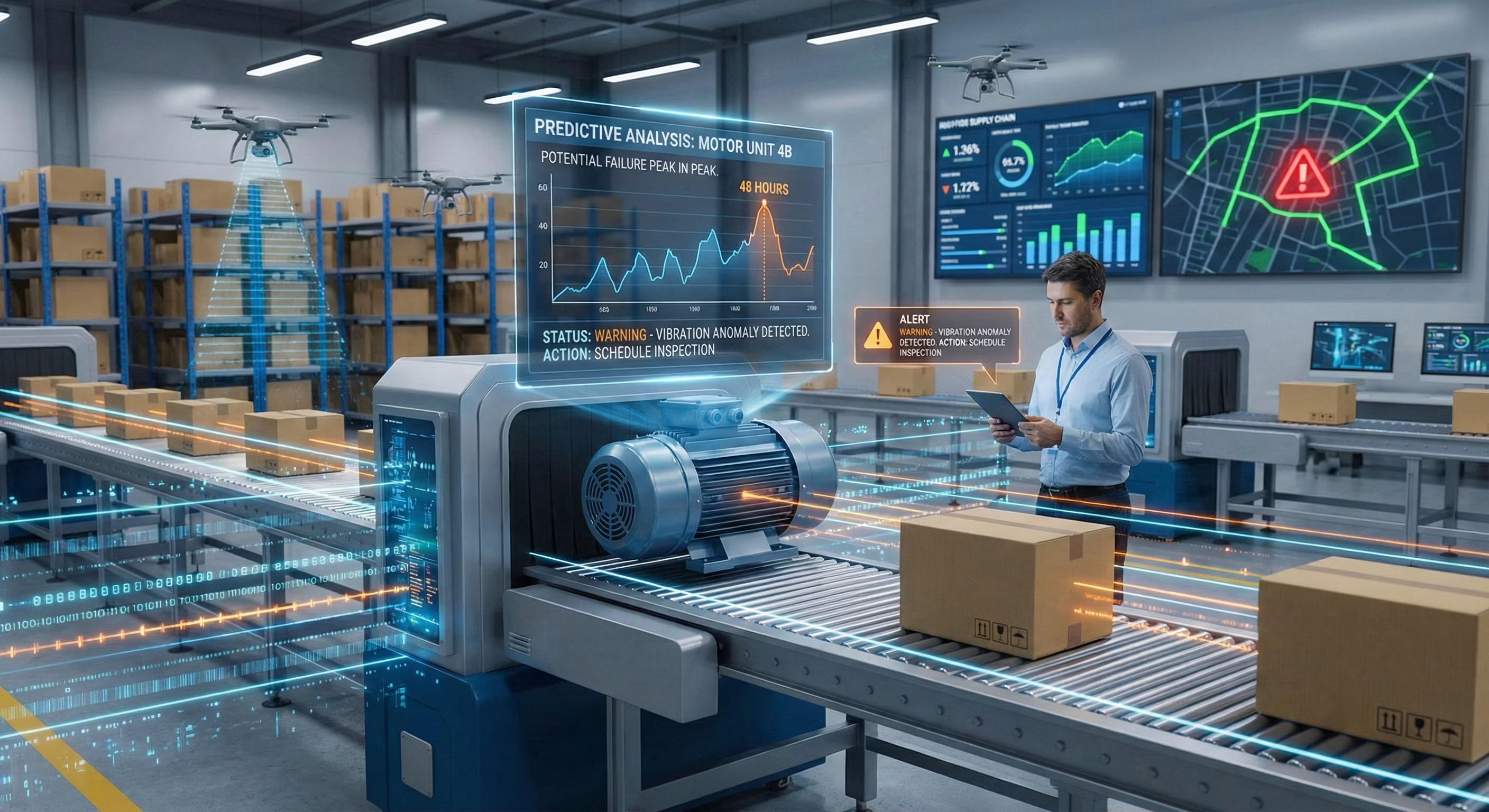
Predictive maintenance is based on a simple principle: detecting weak signals before an incident occurs.
Unlike corrective maintenance (after a breakdown) or preventive maintenance (at a fixed date), predictive maintenance triggers action at the right time, thanks to data.
What this means in practical terms:
continuous collection of information (temperature, vibrations, cycles, energy, alerts)
automatic analysis of anomalies and deviations
recommendation for intervention before breakdown
prioritisation according to operational impact (production/preparation/shipping)
Result: maintenance becomes a lever for business continuity, rather than a "burden".
AI makes a real difference when equipment generates large amounts of data and anomalies are difficult to detect manually.
identify invisible correlations (e.g. micro-variations + drop in yield)
detect recurring failure patterns
estimate a probability of failure and a risk window
recommend actions according to the level of criticality
warehouse: anticipate conveyor blockages before logistics flows become saturated
internal transport: monitoring wear and tear and availability of equipment fleet
production: adjust interventions to avoid stoppages during peak periods
storage: securing critical temperature- or cold-related equipment
The challenge is not only to "predict", but to make decision-making more reliable by integrating maintenance into operations management.
A prediction alone is not enough. Value is created when the company knows how to turn an alert into operational action.
This is where digitalisation becomes crucial: a platform allows data to be centralised, workflows to be standardised, and actions to be automated.
consolidation of alerts and histories (full traceability)
automatic task triggering (maintenance workflow)
intelligent assignment based on skills/availability
real-time monitoring of interventions
operational reporting: MTBF, MTTR, availability, recurrence
No-code allows workflows to be adapted quickly (without constantly relying on development), for example:
modify alert escalation rules
add a quality control form
integrate a new site or new equipment
automate the validation and closure of interventions
In short: predictive maintenance is becoming more agile, quicker to deploy, and better aligned with the reality on the ground.
Predictive maintenance also contributes to a more responsible supply chain.
Why?
fewer unnecessary interventions (meaning fewer trips, fewer parts replaced "as a precaution")
reduction in material and energy waste
extension of equipment lifespan
greater stability of logistics flows → fewer urgent shipments
It is a pragmatic approach to sustainable logistics: reducing the footprint without sacrificing performance, thanks to AI, traceability, and automation.
Conclusion
Intelligent predictive maintenance has become a strategic tool for securing the supply chain: it reduces unexpected downtime, stabilises logistics flows and enhances operational flexibility. By combining AI, automation, platforms and no-code, companies are transforming maintenance into a proactive, data-driven system connected to the realities on the ground.
👉 The question is no longer "how to repair quickly", but how to avoid downtime before it becomes costly.
Preventive maintenance is carried out according to a fixed schedule. Predictive maintenance is carried out according to the actual condition of the equipment, based on data and risk signals detected by AI.
No. You can start with existing data (failure history, interventions, cycles, machine readings). IoT sensors then accelerate the accuracy of forecasts.
Everything that directly impacts logistics flows: conveyors, sorting systems, preparation equipment, trolleys, critical machinery, warehouse automation, refrigeration/temperature control equipment.
Common indicators: reduction in unplanned downtime, increased availability, lower MTTR, improved MTBF, reduced emergency costs, and stabilised service rates.
Fewer unplanned stoppages = fewer breakdowns and less safety stock. Predictive maintenance supports better planning and improves forecast reliability.
Yes, because it allows you to quickly adjust workflows, forms, alert rules and automations, while maintaining governance and traceability of actions.
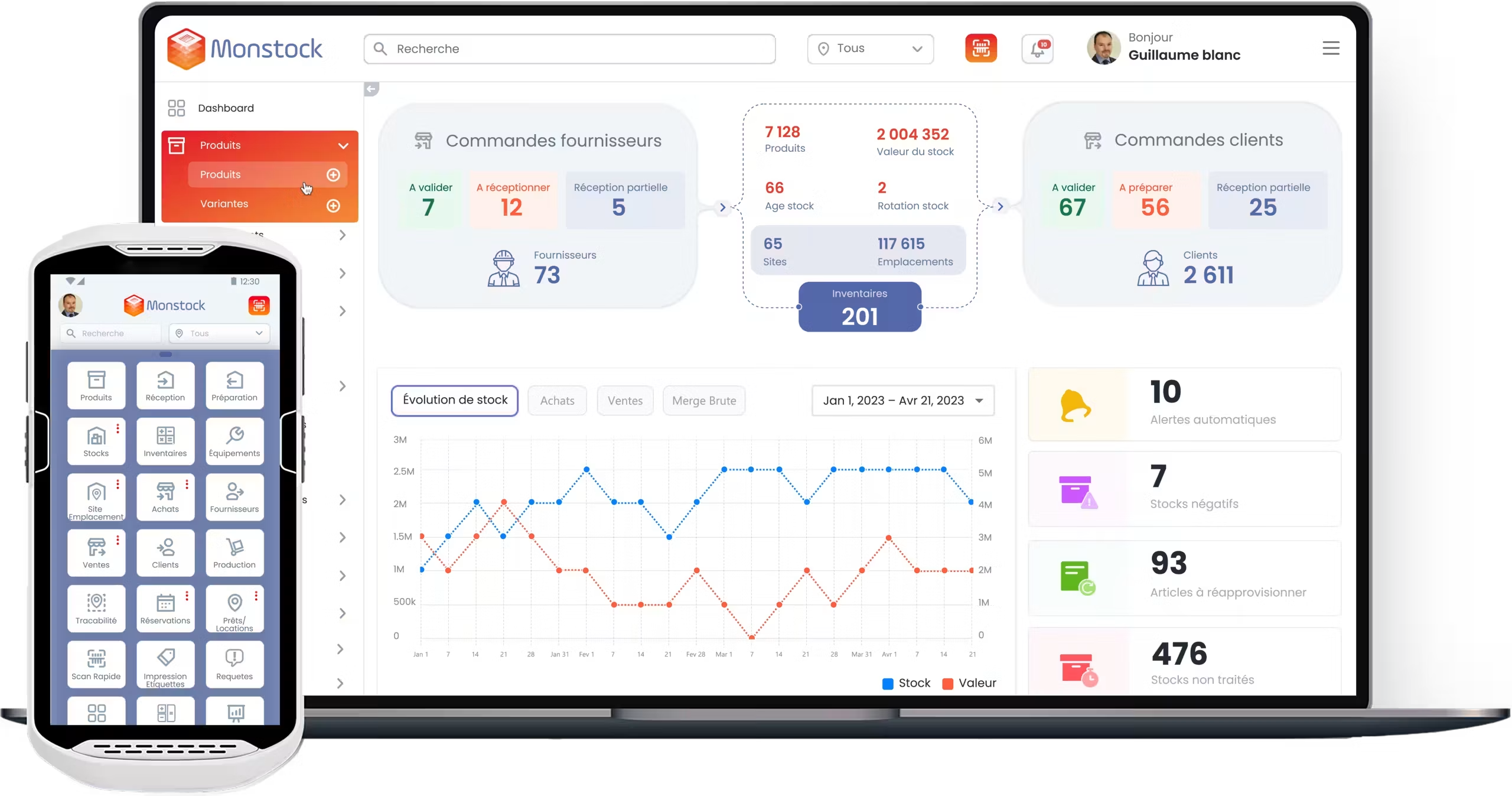
Monstock helps you turn your stock into a real strategic asset. Thanks to agile and intelligent management, our solution enables you to anticipate risks, secure your supplies and guarantee business continuity, even in uncertain times.
To learn more about strategic inventory management and discover our other use cases, click here.
For further information, please contact the Monstock team.
Sign up for our newsletter today